


Cinema writer and film critic Efe Teksoy explores the chaotic energy and socio-historical depths of Josh Safdie’s record-breaking A24 film, Marty Supreme, for AlaturkaNews. Nominated for nine Academy Awards, this high-paced sports epic blends the spectacle of competition with a critical examination of the American Dream. Here is a deep-dive Marty Supreme movie review from a philosophical and socio-political perspective.
A Chaotic Vision by Josh Safdie

Premiering on October 6, 2025 at the New York Film Festival, Marty Supreme, directed by Josh Safdie, received nine Academy Award nominations at the 98th Oscars, including Best Picture. The film is inspired by The Money Player, the 1974 memoir of table tennis champion and hustler Marty Reisman.
While Timothée Chalamet takes center stage, names such as Odessa A’zion, Gwyneth Paltrow, and Kevin O’Leary form essential parts of the high-tension world that revolves around Marty.
Marty Supreme Movie Review: The Society of the Spectacle

At first glance, Marty Supreme appears to be a sports film; yet at its core, it offers a sharp examination of the American myth of success. Although the film places table tennis at its center, its real concern is not competition itself but the economic and cultural narrative constructed around it. Marty Mauser’s rise is less a triumph of individual determination than a questioning of how the very idea of success is produced and circulated.
Safdie does not construct his character through the classic “underdog” model of sports narratives — the figure seen as weak who ultimately prevails. Marty is already talented, ambitious, and energetic; however, the film focuses less on his athletic identity and more on his effort to transform himself into a brand. In this respect, the film subverts the American dream’s myth of the “self-made individual.”
Success here is not an outcome but a performance that must be continually reproduced. At this point, as the French thinker and cultural theorist Guy Debord states in The Society of the Spectacle (La Société du Spectacle), everything in modern society turns into spectacle; Marty’s career becomes part of that spectacle. Success is no longer a prize that is won but a representation that gains value insofar as it is circulated and made visible.
Table Tennis and the Historical Background of Competition
Following World War II, Japan underwent a transitional period between 1945 and 1952 under the administration of the Allied powers, during which a comprehensive reconstruction program was implemented. With the enforcement of the San Francisco Peace Treaty in 1952, Japan regained its sovereignty and gradually returned to global organizations. However, in the atmosphere of the early Cold War, sport was far from the “apolitical” field it is often considered today.
International tournaments represented not only athletic competition but also diplomatic visibility. The return of Japanese athletes to the world stage symbolized the country’s reintegration into the international system. The visual culmination of this process would be the 1964 Tokyo Olympics, which declared Japan’s full return to the global arena.
By positioning the Japanese rival within this historical framework, Safdie transforms competition from a purely individual struggle into something more layered. The figure across from Marty is not merely a technically skilled athlete but a representative of a nation rebuilt in the aftermath of war. In this context, Marty’s defeat signifies far more than personal failure; it becomes a symbolic moment revealing the fragility of the American narrative of superiority.
As the French philosopher Michel Foucault suggests, power operates not only through repression but through production; competition, too, produces a field that compels the subject toward continuous performance. Thus, competition unfolds not merely between two athletes but between two historical moments: one positioned as the victor of war, the other redefining itself upon its return to the global system.
The Regime of Success and Endless Performance
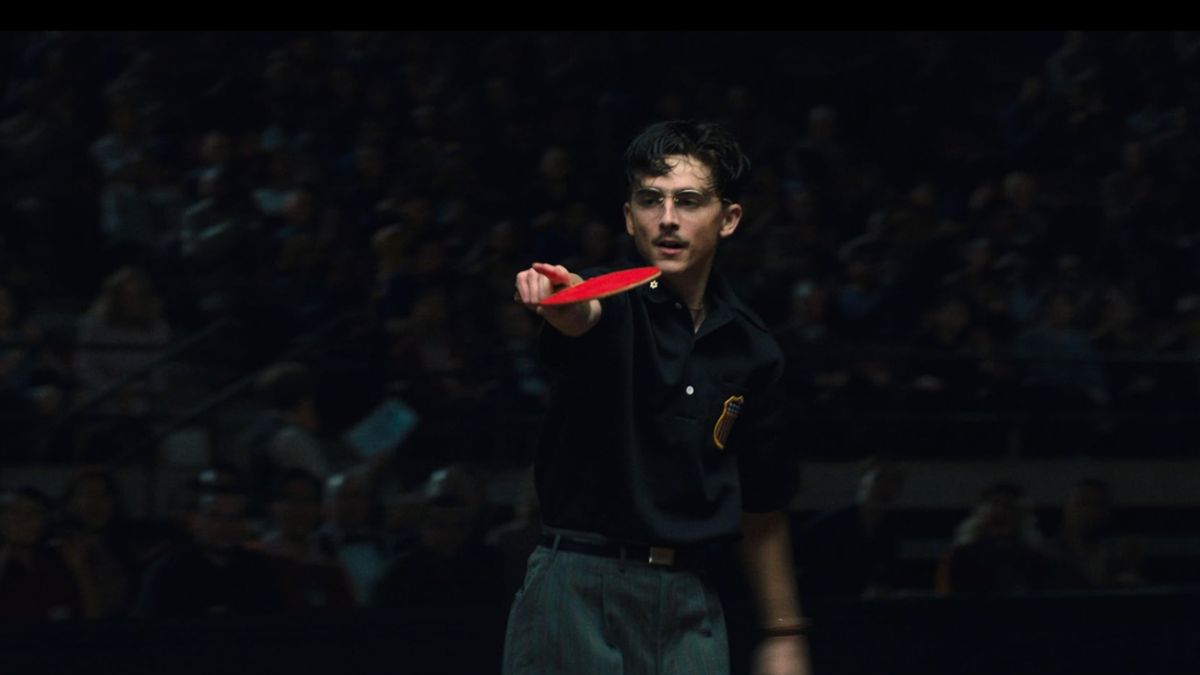
In the end, what remains is not a championship story but the luminous image produced by the very idea of success. As Marty wins, he does not become freer; on the contrary, he becomes more tightly bound to the visibility economy in which he must constantly prove his worth. Performance is no longer a choice but a condition of existence.
As we conclude this Marty Supreme movie review, it becomes clear that victory here is not merely individual achievement but a production of legitimacy operating through market logic.
EFE TEKSOY
References
- Debord, Guy. The Society of the Spectacle. Translated by Donald Nicholson-Smith. New York: Zone Books, 1994.
- Foucault, Michel. Discipline and Punish: The Birth of the Prison. Translated by Alan Sheridan. New York: Vintage Books, 1995.
- Reisman, Marty. The Money Player. New York: Doubleday, 1974.